

Director/filmmaker Casper Kelly has a niche in the vast popular culture, but that proved enough to propel his horror film “Buddy” (central character above) to a modest hit in cinemas.
Digital-centric marketing leveraged Kelly’s fans from his anti-comedy “Too Many Cooks” on the Adult Swim programming block on basic cable TV’s Cartoon Network.
“Buddy” is also another example of online content creators propelling cinema-released horror films, such as recent hits “Obsession” and “Backrooms.” “Buddy” reportedly cost just $3 million to make, which is firmly in the low-budget tier.
Rated R-restricted ages under 17, “Buddy” generated a decent $5.5 million in domestic boxoffice Aug. 28-30 for Roadshow Attractions and Saban Films, two independent film distributors.
The movie’s clever premise centers around a purported revival of an obscure 1990s kids TV show. The seemingly-jovial host Buddy is dressed in a full-body costume (reminiscent of Barney the Dinosaur). Kids cavort with the costumed Buddy on stage happily, at least at first. But the environment grows malevolent. Everyone is left to worry just who this guy hidden in the rubber suit?
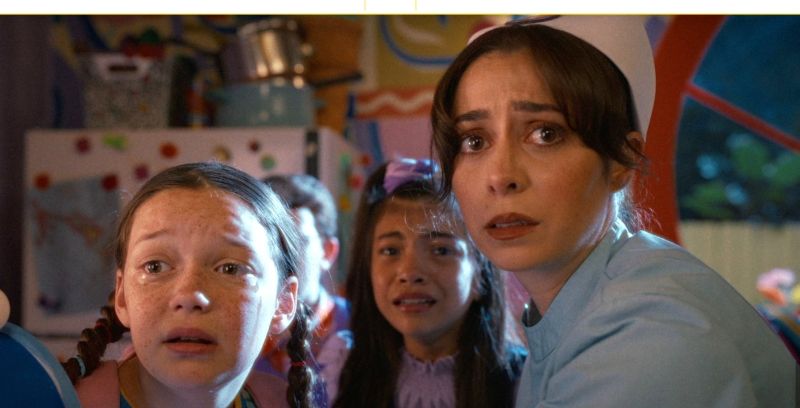
The “Buddy” campaign included brief video teasers but no weighty 2-minute-plus video (full-length trailers are ordinarily a centerpiece of film marketing). A short teaser trailer came out on the cusp of cinema premiere. Usually, movies have at least two full trailers, the first of which is launched no later than three months prior to opening.
But the video snippets online convey a growing mystery. Marketing included an online fan club, which provides an interactive vehicle for audiences to interact with the Buddy character.
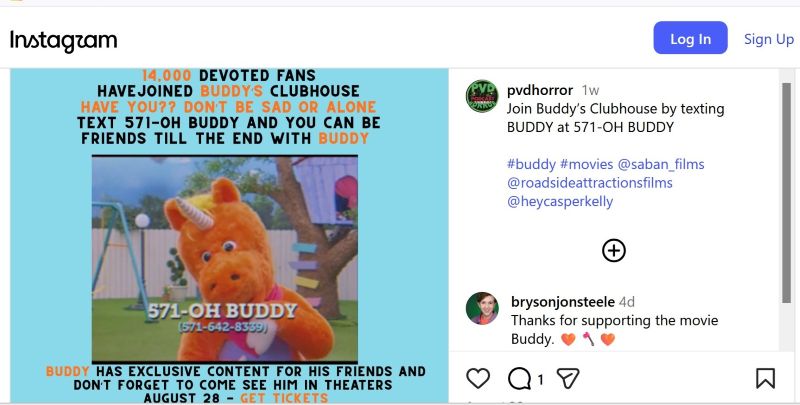
Other staged video snippets include the Buddy character dancing at the San Diego Comic Con fan event, hugging strangers at the Santa Monica ocean pier, Buddy tussling with a theater employee over a bag of popcorn and Buddy getting arrested in Times Square.
These created viral vehicles for fans to find online, and hopefully trigger fan conversations and pass on to their acquaintances, all creating a buzz. The online Buddy Fan Club gathered 25,000 fans signing up via text by premiere time, with an estimated 500,000 following all digital-media platforms combined. Some press coverage played along with the notion that Buddy is sinister.
The cumulative result is that the Casper Kelly fanbase kept discovering more about Buddy as both as the wholesome TV-show-host friend to kids, and in other instances as menacing.
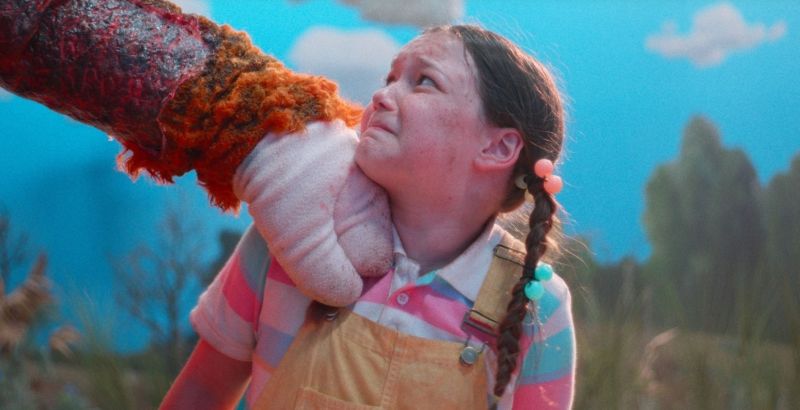
Marketing messaging includes the ambiguous “You Can Be Friends to the End” and scary payoff “Buddy Is Not Your Friend”. The marketing campaign worked because the film is good evidenced by an 88% certified fresh on aggregator website Rotten Tomatoes at premiere (60% is considered good or a hit); the rating with audiences also stood at a high 81%. Saban didn’t respond to questions about the marketing campaign.
In its premiere weekend, “Buddy” ranks as sixth, which is very good for a low-budget horror film. And even better, “Buddy” is holding steady in its second weekend. For that premiere weekend, “Buddy” played on 1,277 screens (1,000 is a “wide” release”) generating a $4,321 per screen average for three-days, which is decent. The third edition of academic/business book “Marketing to Moviegoers” calls a $2,000 per screen average the minimum for success in a wide-release.
“Buddy” premiered at the Sundance Film Festival in January, and also the Cleveland International Film Festival and Fantasia in Montreal, where it was well received.
But the movie did not secure a splashy sale to a large film distributor. So, “Buddy” went the low-budget independent route for theatrical release, in which it flew under-the-radar until its solid boxoffice surprised.
Related content:
Leave a Reply