

Though underappreciated, movies in cinemas are again top of the Hollywood food chain (cinema’s appeal illustrated in AI-generated image above).
“The big screen’s obituary has been written so many times — even by the people who make films,” writes entertainment critic Johnny Oleksinski in the New York Post. “When ‘The Sopranos’ and ‘The Wire’ were airing on HBO (Home Box Office, lest we forget) in the aughts, viewers said, ‘Wow, the acting and writing are just as good as in any prestige movie.’” “Sopranos” ran 1999-2007 and “The Wire” 2002-2008.
There’s a re-embrace of cinema today as audiences are flocking to historical epic “The Odyssey” (a staggering $286 million in just 10 days domestically, U.S. and Canada theaters). Imax theaters showings contribute 22% of its global boxoffice, in a big-screen experience that is shared with an audience not possible at home. Imax tickets are typically $3-8 more than conventional cinema.
Smaller independent films are doing well too in this post-pandemic era, such as “Young Washington.” The historical drama grossed $45 million in domestic boxoffice, which is fine for a $20 million production.

And outside the quality silo, big money is being made with horror flick “The Obsession” that collected $261 million at cinemas in 11 weeks (made for a shoe-string $750,000 production budget). Another unheralded horror flick, “Backrooms,” grossed $197 million in domestic boxoffice (it cost a low-budget $10 million to make). The Michael Jackson biopic surprised with a hefty $272 million domestically.
“After COVID hit and theaters closed, streaming appeared to be the obvious way of the future,” Oleksinski continues. “Big companies such as Disney, Apple and Warner Bros. bet that audiences would never leave their couches again. Theatrical was over. The inevitable migration was complete. … Oops!”
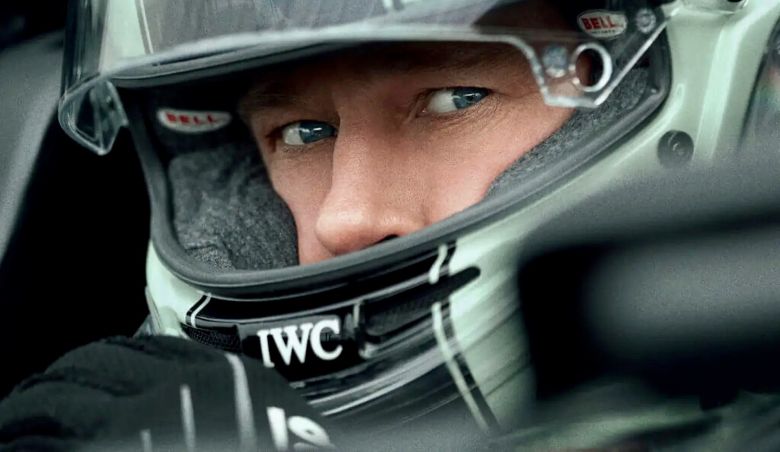
Today, video streamers maintain original films as pillars of their filmed entertainment mix: Amazon MGM Studios (sci-fi blockbuster “Project Hail Mary”), Netflix and Apple TV (Brad Pitt racing yarn “F1”). And a pre-streaming premiere in cinemas is growing among streamers for their original films.
The Oleksinski analysis highlights a flip-flop that is taken for granted. It’s an under-appreciated mood swing in industry mindset and the broader cultural zeitgeist. A few years ago, the mindset was that cinemas are fading to black.
Propping up the cinema comeback today are kids, who have returned in a big way. The women’s demographic and adults embracing upmarket films are problematic, but occasionally hit.
The ladies pushed the catty high-fashion satire “The Devil Wears Prada 2” to a hefty $220 million in domestic boxoffice, which exceeded expectations. “Prada 2” did great for a major-studio film that cost a middling $100 million (its global gross is $710 million in boxoffice).
In post-pandemic experience, Hollywood came to realize that cinema economics with one-view by one person at one-time beat the financial return from the saturation exposure of movies that occurs via video streaming.
Despite the ebullience, films in cinemas can occasionally disappoint, like Steven Spielberg’s “Disclosure Day” with just $116 million domestically since June 12 (which is un-Spielbergian boxoffice!). And some others just flop, such as live-action toy-line adaptation “Masters of the Universe.” Also, superhero comic book adaptations are no longer automatic boxoffice hits, such as the poorly performing “Supergirl.”
But the hits outnumber the misses as audiences thirst for big-screen films, putting aside online diversions such as TikTok, TV series and sports on TV.
So, cinema coexists with entertainment rivals, and is not being swept aside, as many pundits had recently predicted with certitude.
Top photo illustration: Glenn Abel via Gemini AI
Related content:
Leave a Reply