
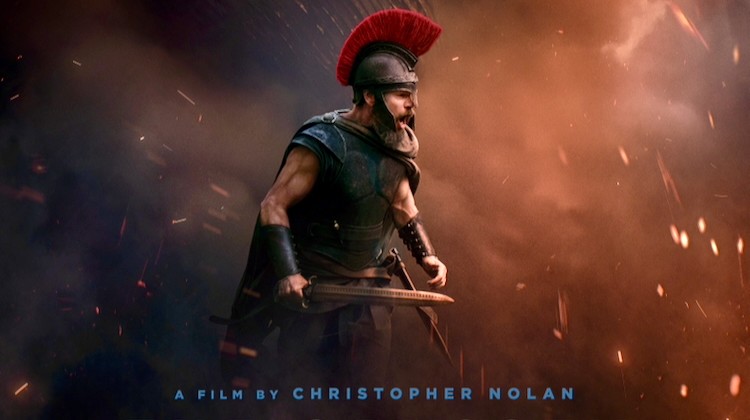
Acclaimed filmmaker Christopher Nolan takes a thoroughly-modern approach to casting his next movie that is based on a classic ancient Greek tale, igniting a media firestorm from influencers, movie fans and critics.
For his film “The Odyssey,” Nolan selected black actress Lupita Nyong’o as famed historical character Helen of Troy, whom ancient text and history depict as fair-skinned. Nyong’o won the Oscar for best-supporting actress in “12 Years a Slave” and is a Tony award nominee. Also, transgender Elliot Page, who received an Oscar nomination for “Juno” as Ellen Page, plays a male warrior, though the exact character is unconfirmed. Page is slight of physical stature, so a curious choice for a macho warrior.
“I think we pushed pretty hard on this one and maybe found some limits,” Nolan told CBS Television’s “60 Minutes” news/magazine show. His modus operandi is to make “the most extreme version of a story possible.”
Universal Pictures will distribute “Odyssey” on July 17 as a wide domestic release (U.S. and Canada). It is yet to be rated (but expected to be R-rated restricted due to period sword-and-sandal violence).
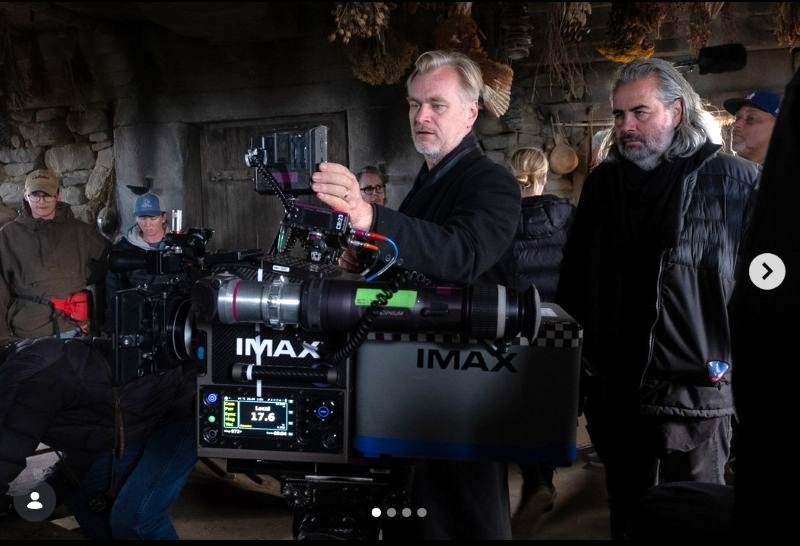
Nolan directs “Odyssey,” which he also co-wrote and co-produces. The film is based on the famous 2,700-year-old tale of love, war, family and deception with the giant Trojan horse statue. It sports an all-star cast. Nolan won two Oscars for atom-bomb historical drama “Oppenheimer.”
Nolan’s detractors say today’s woke philosophy makes for one-way creative freedom of minorities crossing over, as in “Odyssey,” but not the other way around. A headline in Allure women’s magazine in 2019 suggests that “Scarlett Johansson Is Facing Major Backlash for Saying She ‘Should Be Allowed to Play’ Anyone.” The social media trolls pounced as the white actress took heat from commentators and culture warriors for portraying characters who are diverse.
“Whenever a white actor or actress is cast in a role of another ethnicity, it’s condemned as ‘whitewashing,’” writes syndicated conservative columnist Rich Lowry in an opinion article. But “what’s good for Lupita Nyong’o should be good for Scarlett Johansson, and vice versa.”
Indeed, the Academy of Motion Picture Arts and Sciences instituted a quota for race and gender talent inclusion in 2024 for movies to qualify in the Best Picture category, after complaints that nominees were “#OscarsSoWhite.”
Trade newspaper Variety defended the Oscar diversity requirement in an article suggesting all nominees prior to implementation would still qualify. Okay, then why have the rule if it supposedly makes no difference? So does this mean that the #OscarSoWhite controversy was just bunk and hooey in the first place? Also, it’s possible worthy films that won’t pass Oscar diversity muster don’t bother to formally enter, since they’d be disqualified.
For the “Odyssey” debate, Nolan has plenty of defenders with his creative decisions. “You don’t actually have to go to the movies,” Whoopi Goldberg commented on “The View” TV series on ABC. “I don’t know why you feel you have to speak on this. Don’t try to clown me, baby.” Goldberg is an Oscar winner for “Ghost” in 1990.
How is this going to turn out? My guess is “Odyssey” boxoffice will suffer when released in two months if the drama is perceived as a “political” film. That’s its trajectory now.
Experience has shown that the audience appeal of overtly partisan politics is limited. Sprinkling in a little political messaging is fine, but chunks of the audiences turn away when doctrinal is perceived as a major thrust.
“Odyssey” can’t be relegated into a narrow political niche if it hopes to pull a huge audience to cover its reported $250 million cost. That’s the top end for any Hollywood movie production. The large swath of population that’s traditionalists will be turned off by non-traditional storytelling and avoid any whiff of culture-wars preaching.
Hollywood describes wide appeal as “four quadrants,” which is a research term. Hollywood divides the cinema audience into male/female, and then again by age of over and under age 25. The interests of these four slices of audience demographics broadly differ, but create a boxoffice tsunami when all four demos are electrified for the same movie.
In an example of the peril of political taint years ago, “a series of Iraq- and Afghanistan-related war films flopped in quick succession in 2007,” notes “Marketing to Moviegoers,” the academic/business book. They were well-made and serious but appealed mainly to anti-war activists, so a narrow arthouse audience.
Film distributors vainly tried to reposition those 2007 movies as broadly-focused thrillers in marketing to shed the political vibe, but to no avail. Those bomb films include Tommy Lee Jones-fronted “In the Valley of Elah” and “Lions for Lambs” with Tom Cruise, Meryl Streep and Robert Redford.
Another object of controversy for “Odyssey” is dialog that is modern American-style English, not stylized theatrical English typically used in period dramas.
Pop-culture influencer the Critical Drinker found it jarring that everyone “speaks in American accents using modern terminology. …Having your actors talking like they just walked off in the street in downtown L.A. seems lazy and immersion breaking.” Interestingly, Nolan is British but chose the American-voices accent, although that was simpler for his cast of Yanks.
Side-stepping politics, distributor A24 pulled off marketing magic in 2024 by presenting societal-conflict drama “Civil War” as non-judgmental, when its villains leaned to America’s contemporary right-wing. “The final A24 trailer presents a character prominently saying ‘it is American. 100%’ in what might lead viewer to conclude the movie is not an indictment of today’s political right,” says Marketingmovies.net. “The trailer could easily be confused for red-states resistance classic ‘Red Dawn.’”

The casting of Elliot Page as an “Odyssey” soldier related to historical character Achilles prompted some influencers today to serve up clips of burly Brad Pitt portraying Achilles in the 2004 scandal-and-sword historical drama “Troy.” The diminutive Page is underwhelming in those comparisons, inspiring fake video comparisons.
The marketing for “Odyssey” so far strikes me as unmoving with its simplistic message of yearning to go home. That’s rather tinny like the “we’re a family” bromides in the shallow fast-car actioners “Fast and Furious.” Still, the movie is piling up publicity, including Elle magazine publishing fashion photos of “Odyssey” stars Nyong’o, Anne Hathaway, Charlize Theron and Zendaya.
The Helen of Troy character central to “The Odyssey” is remembered for the famous line from a 1604 English stage play praising her beauty as “The face that launched a thousand ships.” Her beauty inspired a protracted war. Columnist Lowry jests about today’s buzz for Nolan’s movie with its modern orientation: “It’s the controversy that launched a thousand X posts.”
Related content:
Leave a Reply