
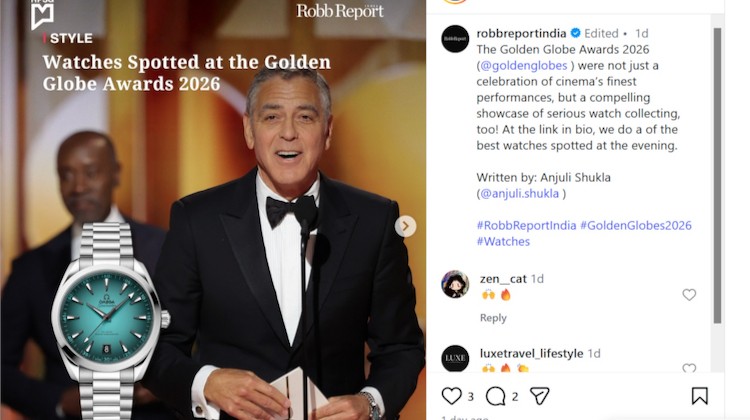
The luxury wristwatch industry is going ga-ga over product placements on celebrities at awards shows. Leonardo DiCaprio and George Clooney are among the stars conspicuously flashing pricey time-piece metal for TV and photographers at Sunday’s Golden Globe awards.
A Hollywood Reporter magazine story summed up with the headline: “Leonardo DiCaprio Really Wanted You to See His Rolex Daytona at the Golden Globes.” (Above, Clooney’s Omega-brand watch highlighted in an online post by luxury-goods magazine the Robb Report).
The awards show was a product placement extravaganza. Dozens of online posts and magazine articles provided enthusiastic commentary with video and still images of stars showing their wristwatch hardware at the Golden Globes.
“A-list actors acquitted themselves well in the art of ensuring their status timepieces were easily seen beyond the end of their shirt and jacket cuffs,” wrote Laurie Brookins in the THR article. “Poses on the red carpet at the Beverly Hilton also were often angled to ensure the left wrist was prominently positioned in front. And why not? Being a paid ambassador or a ‘friend of the house’ of a respected watch brand isn’t a casual undertaking.”
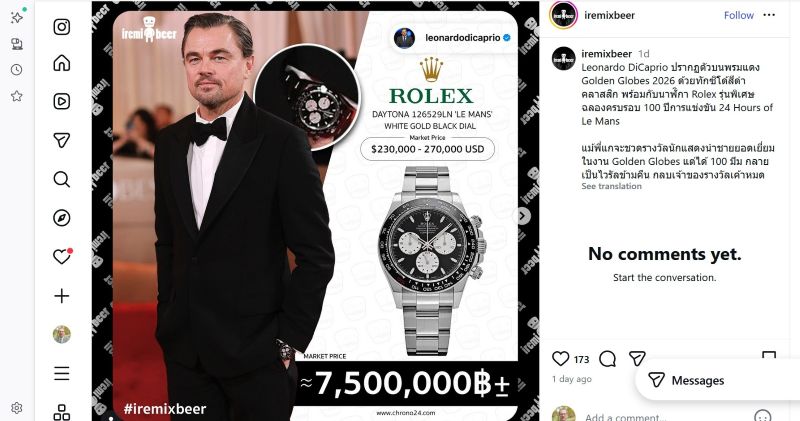
DiCaprio wears Rolex, after being brought aboard as “brand ambassador” a year ago, and the Swiss uber-luxury brand is also official sponsor for the Oscars since 2016. Also at the Globes, Clooney sports an Omega time piece. Actor/director John Krasinski wore a Glashutte Original Sixties wristwatch. Dwayne Johnson, whose wrestling drama “The Smashing Machine” is an Oscar contender, was seen with a Chopard.
Financier, TV personality and fancy-watch collector Kevin O’Leary, who is in the ensemble cast of Oscar-hopeful drama “Marty Supreme,” wore multiple wristwatches, which he enthusiastically posed for press pictures. The star of TV’s “Severance,” Tramell Tillman, had a Audemars Piguet watch, whose cost is unknown because it’s “price upon request,” says THR.
It’s all fodder for the online “cottage industry” of posting visuals and text about sighting hardware on celebrity wrists. Hollywood and expensive time pieces are potent. A Rolex Daytona wristwatch owned by the late Paul Newman fetched $17.8 million at auction in 2017; the inflated price is due to its provenance with movie superstar Newman. And DiCaprio now wears the same Rolex model.
Wristwatch makers also pursue product placement in movies, such as IWC getting massive exposure in the AppleTV/Warner Bros. racing movie “F1.”
Luxury wristwatch makers are in a technological squeeze, so they grab for Hollywood glitter to prop up demand. Corporate deals for brand promotions can be in the hundreds of thousands of dollars a year and more; the consumer brands also promotes their partners with marketing muscle that can include direct, pricey advertising support for movies.
Meanwhile, individual Hollywood talent can pocket tens of thousands of dollars to the low hundreds of thousands a year for being official brand ambassadors. These are welcome side gigs, providing steady income in the otherwise up-and-down Hollywood business. It could be argued some wristwatch appearances are simply personal choices of celebrities, but that’s not likely in an industry where personal managers, business managers and agents advise clients to cash in. Plus, watchmakers are aggressively courting the famous showering them with money and free goodies.
The squeeze is from traditional time pieces being obsolete, in an age where everyone owns smart phones displaying time of day, as do health-monitoring electronic wearables like Fitbits. Earlier, the electronic watch (called quartz) craze in the 1970s brought highly-accurate, inexpensive timepieces that undermined traditional all-mechanical (“automatic”) wristwatches.
In response to simply displaying time that is no longer particularly useful, luxury wristwatch brands promote their products as high-end jewelry. The Golden Globes initiative — which is product placement where recognized brands appear in staged entertainment settings — seeks rub-off from Hollywood glamor.
It’s working because snob appeal inflates prices. Top luxury watches are far more expensive than their manufacturing costs and lesser brands. An all-steel, bottom-of-the-line Rolex starts at a lofty $6,300; meanwhile, high-quality mechanical steel watches from less-prestigious, European brands start at about $700.
It’s accepted wisdom that Hollywood presentation directly influences sales and perception of consumer products, notes the third edition of academic business book “Marketing to Moviegoers.” When Clark Gable went shirtless in a memorable scene of 1934 romantic comedy movie “It Happened One Night,” legend has it that sales of men’s undershirts dropped.
Related content:
Leave a Reply