
Conventional wisdom holds only one out of four mainstream films is profitable, but Hollywood veteran Kevin Goetz says that industry would hit three of four if it paid more attention to the audience.
“Shouldn’t every movie make money?” Goetz posits in his new book, suggesting Hollywood needs to dial in the audience at early stages. “When the decisions are made about how much will be budgeted to make and market a film, gauging its appeal to an intended audience is critically important in assessing risk.”
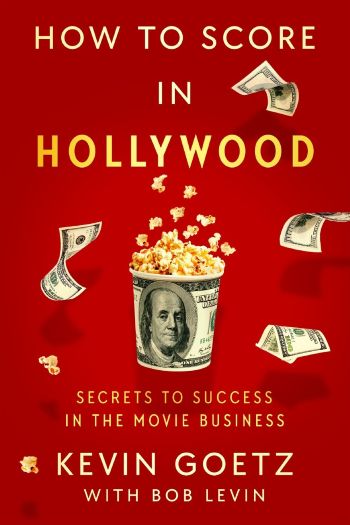
Goetz reveals decades of marketing/research experiences and wisdom in “How to Score in Hollywood: Secrets to Success in the Movie Business,” a business and marketing book. Simon & Schuster is scheduled to publish it Nov 11.
The Hollywood researcher’s tool box includes concept testing, which is evaluating storylines and talent when projects are in just the talking-phase. “Movies-for-nobody are based on concepts that do not have enough appeal to inspire intense interest from at least one major demographic or one large psychographic segment,” the book says.
Movie audiences are grouped in segments, with the simplest array of four quadrants divided by gender (male and female) and then also age (age 25 is the dividing line). The message of “How to Score in Hollywood” is to gear the film production and marketing expenses to be appropriate for anticipated audience size that generates revenue.
A movie without a dedicated core audience needs to be modestly budgeted to pay off (not necessarily abandoned). On the flip side, film projects with strong appeal to multiple quadrants merit greater investment, such as big stars that can drive their appeal further.
Says the book, ” ‘Pushing Tin,’ a dramedy about air traffic controllers [with a famous ensemble cast]; ‘The Big Year,’ a bird-watching film starring Owen Wilson and Jack Black; and ‘Ravenous,’ a horror movie about cannibals set during the Mexican-American War, were all movies for nobody, because there wasn’t a single demographic quadrant or psychographic segment with enough interested viewers to justify spending marketing dollars chasing after them, let alone the production spend to get them made in the first place.”
Goetz turns a clever phrase with the notion of the “feathered fish,” which means not fitting into standard categories (so, neither fish nor fowl). Films that are feathered fish are marketing challenges.
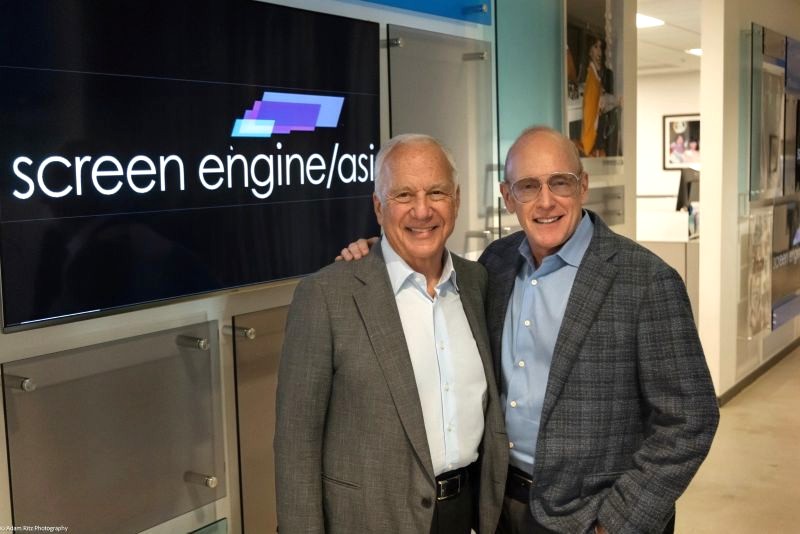
“How to Score in Hollywood” quotes other industry executives, whose comments are interspersed with dozens of real-world Hollywood anecdotes from Goetz, and co-author Bob Levin. The duo are top executives of Screen Engine/ASI, which provides consumer research services that plugs in Hollywood decision-makers to audience tastes.
Co-author Levin said in an interview that marketing shouldn’t decide what movies to make but rather be the voice of the audience so decision making is informed. “What is the basic idea that will bring people into this particular movie?” he says.
In Hollywood audience testing, results are compared with past findings, yielding “comps” from movie history. Testing sometimes includes sampling audiences in select, bellwether foreign territories, in order to grasp a film project’s global potential with consumers.
An example of a prerelease test screening helping a film, the 1998 romantic and family drama “Hope Floats” underwent a successful reshoot after principal photography wrapped. Females in the initial test-audience viewing a first cut found the lead portrayed by Sandra Bullock unsympathetic for seeming to be indifferent to the death of her mother.
In a simple fix, this scene was then added to “Hope Floats”: Bullock finds one of her late mother’s dresses in a closet that she “holds it up to her face to take in her mother’s scent … and breaks down in tears, sobbing in grief,” the book says. “That one addition to the story made her entire character more human and vulnerable for the audience. The next time the film was tested, it played considerably stronger.”
Research findings aren’t always clear cut, and sometimes fall into what Goetz calls “the murky middle.” It’s defined as “neither great nor awful, but with little chance of being financially successful. … When a movie concept we’re testing comes back in the murky middle, it usually means one thing: more work needs to be done.” That is further elevate what is positive and fix what popped up as a problem.
Another finding can be audience confusion, which points to tightening the story-telling to fix. “Films about hauntings will often generate high levels of confusion if the rules around the ghost appearances, powers, and behaviors are inconsistent,” the book says. “The same thing applies to aliens or any other type of monsters that require world building. The audience will go along for the ride as long as boundaries are drawn” and consistently applied.
The world of the original films is expanding for Hollywood. Streamers like Netflix are producing their own made-for-video movies, though audiences sometimes classify them as less-than-theatrical. Rather, they’re deemed suitable for watching on the sofa. Says Goetz: “I hear it time and again in my focus groups and see it on surveys that test audiences fill out, ‘Good for a night at home, but I wouldn’t pay to see it in a theater.’ “
Welcome to the new media landscape!
Goetz is the founder and CEO of Screen Engine/ASI, which provides entertainment research and strategy information to film studios, television networks and streamers. He’s also a member of the Academy of Motion Picture Arts and Sciences, the Television Academy, and the Producers Guild of America. He previously authored “Audience*ology: How Audiences Shape the Films That We Love.” Goetz hosts podcast “Don’t Kill the Messenger,” whose title is a humorous reference to researchers that sometimes have to deliver bad news about audience reactions to film/TV executives.
Levin is president and COO of Screen Engine/ASI, which he says listens to audiences to help inform marketing and content decisions. Levin spent over two decades leading marketing at Disney, Sony, and MGM, overseeing campaigns for iconic titles such as “The Lion King,” “Men in Black” and “Legally Blonde.”
Related content:
Leave a Reply