
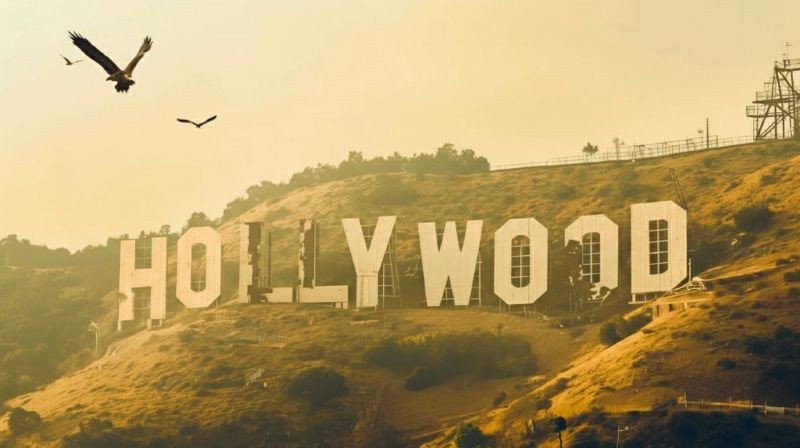
The higher-education industrial complex is under siege from both within and outside, and film schools are experiencing collateral damage.
Two former executives of the Los Angeles Film School have filed a civil lawsuit that recently surfaced claiming the for-profit entity misstated the employment success rate for its graduates. Those insiders allege this was done to keep tuition grants flowing. L. A. Film School is located on Sunset Boulevard in Hollywood.
Meanwhile, problems also pile up externally in higher ed academia, which includes colleges and universities. In particular, the population of graduating high school seniors (prospects for going to college) is forecast to fall steadily through 2041. In another source of hurt, the general population increasingly questions whether the expense of going to college is worth it; previously, it was an article of faith in America that a college education would pay for itself in the long run.
Something that often gets overlooked: college is not a trade school. Graduates emerge as polished, thoughtful and educated. Those attributes enable them to land high-paying, low-physical demand jobs, often referred to as white collar.
Film studies are something of a hybrid area of learning where directorial and on-camera performing involve trade-school-like physical work. Cinematography is both science and art, requiring hands-on technical skills. Animation creative work can be akin to assembly-line manufacturing work.
Parts of Hollywood operate under an apprentice system, where work experience is a stepping stone and there’s a high degree of personal networking. At the talent agencies, for example, careers begin with apprentice work, such as starting out in the mailroom, or serving as as clerical personal assistant to an agent.
Film schools used to sell the dream that students would become the next Steven Spielberg or Meryl Streep. These days, young people starting careers can forget all the trappings of traditional Hollywood to instead become online influencers and work in decentralized digital media. It’s the same craft as traditional Hollywood with storytelling, imagery and character development. No film-school degree required, or even desired!
If successful, online influencers eventually can crack traditional Hollywood. Just look at influencer queen Kim Kardashian, who became rich and also works traditional acting roles.

Influencers are tuned into audiences, which traditional film schools often overlook or downplay. As the academic/business book “Marketing to Moviegoers” states, movies in legacy Hollywood are birthed by a small cadre of adoring studio executives, who are all in love with their projects. Getting an outside opinion makes sense. But film creatives are often dismissive or hostile because research is a function that they don’t control and can impact creative decisions, says the third edition of academic/business book “Marketing to Moviegoers.”
Film schools often downplay the science of audience research because it is not artistic. Many film school graduates have little idea of the business side of Hollywood, which is a critical to careers.
The author recalls the head of a major advertising agency specializing in film marketing saying that the agency no longer hired film school graduates after finding that they are out of touch with the popular culture. The agency had employed film schoolers, figuring that they knew the landscape, but found they were narrowly focused on the esoteric and arty.
There’s nothing wrong with arty films, but don’t expect to make a good living and easily repay student loans from a career in the hardscrabble independent sector. Film schools and fine arts education programs tend to glorify the independent film sector with its edgy and raw movies, even though job prospects in the sector are meager.
On the other hand, there are some efforts to make film studies more practical, meaning useful knowledge that can be a springboard to success later in the job market for graduates. Colleges and universities from all over the country have planted on-the-ground media studies programs in Hollywood. These include impactful internships.
Regarding the L.A. Film School lawsuit, it “accuses the school of ‘hoodwinking”’ thousands of students with false claims about graduates’ prospects for employment,” says a Variety story by Gene Maddaus. “The school offers two- and four-year degrees in film and music production, animation and other fields, with tuition ranging from $40,000 to $80,000 per program, according to its website.”
LAFS receives about $85 million per year in federal assistance, is a fixture in the Hollywood area and was lauded in in trade newspaper Variety’s 2025 Entertainment Education Impact Report. LAFS’s owners also have control Full Sail University in Winter Park, Fla.
Student loan programs are object of controversy with allegations that they burden recipients with debt that can never be repaid. A rare federal government crackdown on student loan abuses led to the closure in 2015 of for-profit Corinthian Colleges — the owner of Heald College — and ITT Technical Institute.
But my impression is abuses persist, particularly since institutions that bag government subsidy funds are not held accountable if their graduates don’t succeed later in the job market. Also, it’s a little appreciated reality that a student with an undergraduate degree, a lot of loan debt and bleak job prospects can simply get more college loans for advanced degrees. That just piles on debt and delays repayment.

Some blame just for-profit schools for abuses, but fingers also point to traditional colleges and universities for profligacy. For example, a Wall Street Journal newspaper expose in 2023 recounted an ill-advised massive expansion program at West Virginia University. The state-run school ended up with brand-spanking new facilities that are not used. The fallout was painful staff cuts, but that was after administrators were paid fat “performance” bonuses for pushing unneeded facilities. Such examples of higher-education expansion folly are a problem across the higher-education industrial complex.
The decline in higher-ed was easy to forecast. Actuarial data clearly showed teen population would decline. The proliferation of online-studies, which undermine in-personal residential enrollment, is a growing phenomenon. Sprawling college campus facilities can’t be supported by online, where competition is cut-throat. Every online school is in direct competition with the whole world.
Traditional universities and colleges are also being squeezed by their inability to manage their own operating finances, which is a self-made problem. The relentless increases of tuition at rates higher than inflation, which has continued for decades, means tuition is 42% higher by some estimates, in real terms that adjust for inflation, in the past 25 years.
Anecdotally, tuition at the author’s alma mater university in the Midwest skyrocketed 550% since the mid-1970s (when I graduated), not adjusting for inflation.
Another source of financial pain is President Trump’s crackdown on rich research grants and easy access by foreign students, which crimp higher-education finances. Overseas students are particularly prized because they tend to pay full tuition in cash and don’t get financial aid. But they face increased regulatory obstacles to entry.
Another problem is legacy universities are being drained by startups that are student magnets with traditional approaches or other attractive attributes lacking at legacy higher education. A prime example is Christian-oriented Liberty University in Virginia, which was only founded in 1971 and now has 15,000 residential students on campus. Those are 15,000 students that in 1970 would have walked into other legacy universities.
Another concern is that sporadic on-campus protests and violence at legacy higher-ed institutions risk undermining future enrollment. Prospects and their parents understandably might balk spending tens of thousands of dollars each year at institutions where classes are cancelled and learning interrupted because of social and political strife.
A college degree is a service purchased. Prospective students and their parents, who often pay tuition, have more options with online degrees and have reason to be skeptical of the cost/benefit calculation.
Related content:
Leave a Reply